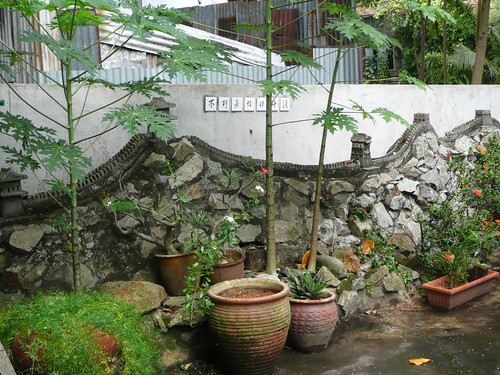
We decided to make a stop at the market in Kuala Terengganu as the food market is always one of the most interesting place of visit. There was a brand new building opposite the market. We are not sure what it is but the local architecture sure looks imposing and beautiful against the blue sky.
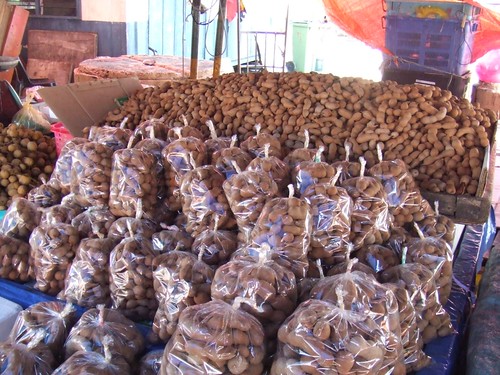 The first stall we came across was one selling tamarind pods. We eagerly bought some only to find later that stalls inside the market was selling at significantly lower prices. We did not follow the advice of not buying from the first stall you came across until you had checked the prices.
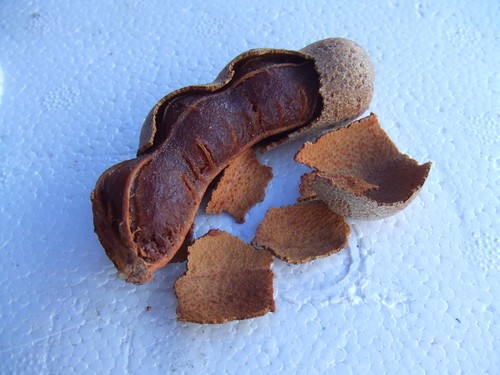 This is what the inside looks like, each segment of the pod contained a seed linked by fleshy meat that tasted both tart and sourish. Not my favorite but the ladies seem to take a liking for them. However, they are great as a spice and can be used to produce some of my favorite dishes – Asam Fish and Asam Prawn. I remembered once I had a lovely Asam Crab in Vietnam too.
A Tamarind tree can be very tall rising above 20m. Tamarind wood has a bold red color and due to its denseness and durability is used to make furniture and wood flooring. Its branch is sometimes used to make a Tamarind switch for corporal punishment – ouch!
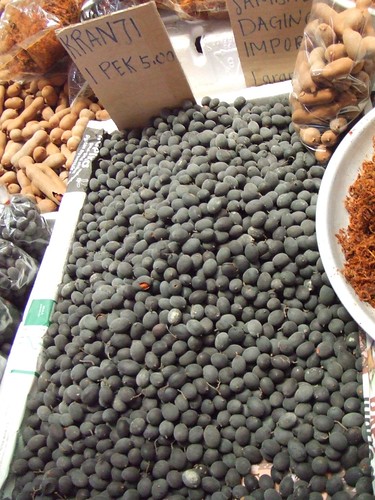 These grape like looking fruits are called Kranji or Keranji. It has a hard black brittle shell and dark brown meat surrounding a flat seed. It tasted somewhat like a Tamarind hence its English name – Velvet Tamarind. It is never a cultivated plant because it has a very long juvenile period before flowering, as long as 15 years. Its hard compact wood is highly prized thus leading it being logged. The tree is threatened species. The Thais dried the fruit and add sugar and chilly to make it into a fruit candy.
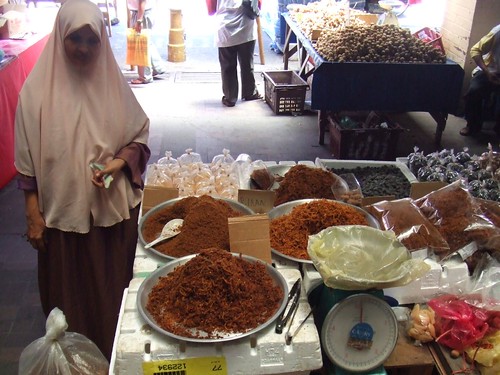 Many types of meat floss are being sold in the market especially from chicken and beef. They are produced in different texture – powder, strings, lumps etc.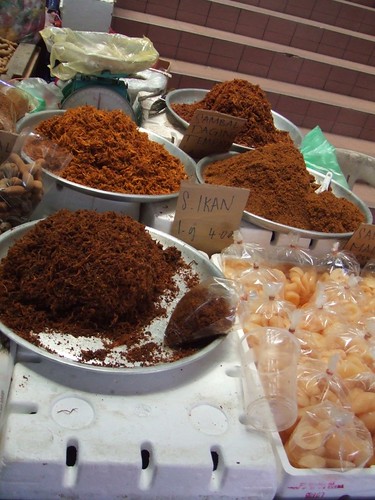
The light orange fruits in small plastic bags at the right-hand bottom of the picture are honey salak. I have never eaten salak in this form having always eaten them fresh. I now regret I did not try it then for I will always be wondering what they taste like.

Source: Wikipedia
The fruit is called snake skin fruit in English because the scale like skin resemble that of a reptilian skin. The hard leathery skin is misleading for it pealed quite easily. Inside are three lobes that looked like giant garlic with a hard seed in the center. The original fruit’s taste is relatively mild with a sourish tinge and a nice aromatic flavor. The texture is very crunchy. It is quite different from other fruits. It is difficult to find really good fruits but I liked it quite a lot when I come across a good one. My experience range from very sourish I had in Phuket, slightly flat in Surabaya to the best I had – sweet, slightly sourish and aromatic in Bali.
These fruits are seldom sold in the average market in the Central region. We walked further into the market looking for more discoveries.