Showing posts with label Chukai. Show all posts

Saturday, January 5, 2008

JJCM in KT #18 - The Journey Ends With A Temerloh Patin.


We could not resist going back to Hai Peng coffee shop (see…) for another drink. I tried their ice black coffee but preferred the hot version. I was deeply disappointed that all the nasi lemak were sold out. Thought it was late afternoon, the shop was still as crowded as before. We finished our drinks and wondered when can we be back here again?


Welcome to Hai Peng from
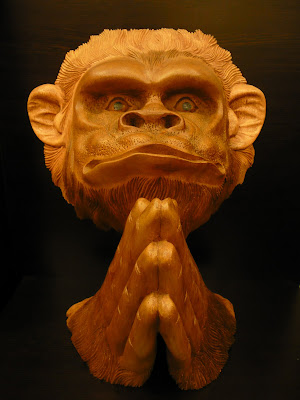
A monkey in songkok...


And a rooster and hen.


After that last stop, we hit the highway again. Dusk was gathering fast and the world around us started to deepen. The clouds opened up for a last burst of golden light but appeared as a last desperate charge before being overwhelmed by the approaching night. Few cars were on this new highway and it was a pleasure to cruise through it.


With the departing sun, the weather cooled and mist started to gather force settling on the forest giving it a mystical air. We fell silent as if to connect with the atmosphere. The only sound is the humming of the car engine, sound of the tyers on the road and the rushing wind as the car sliced through the air. We turned reflective and slightly melancholy. I always felt this way coming to the end of a wonderful journey.


But the journey wasn’t over for I remembered the delicious Patin fish I had in Temerloh, in a restaurant I stumbled in by accident 10 years ago. 3 years later I sought it out and enjoyed the fish again. But it was now 7 years later. Is that restaurant still there?

It was pitch dark by the time we reached Temerloh and we were consumed by ravenous hunger. I only had a very rough idea where the restaurant was and the only time I was in Temerloh was to stop over for food. I remembered it was in front of an open field. When we finally found it, our hearts dropped for the restaurant had shifted. Luckily, on top of the shuttled door, there was an old banner informing its new location even though it had already shifted two years ago. And we were fortunate that apparently no one has rented that place since. We managed to find “Wee Kee” restaurant in its new location and a few rounds.


We were so hungry that I did not stop to take good picture before digging in. And what a delight to dig into nostalgia with every bite. The dish at the top is brinjal or egg plant. It is not unlike any brinjal dish you’ve seen, right? They are usually sliced or diced but Wee Kee served it mashed. It rich flavor (which it borrowed from the other ingredients it is cooked with – be it minced meat or dried prawns) literally melted in your mouth. The fried prawn with dark soy sauce is a common dish but the simple seasoning really brought out the succulent taste of fresh prawn without overwhelming it. The “Tau Chui” pork on the other hand is richly enhanced by the strong taste of fermented soy bean paste. The “house specialty tofu” is fried with minced meat and is also excellent.


But the highlight of the feast is of course the delicately steamed Patin fish which is also called “silver catfish” which Temerloh is most famous for. I always liked this fish for its smooth slippery texture and sweet taste. If done well (and depending on the fish), you will not get the slightly earthly flavor. Why I say depending on the fish is because you can buy Patin pond bred in stagnant water at RM5.00 per kilo, Patin grown in river cages for RM12.00 and wild Patin at RM100.00 per kilo! Connoisseur swore the difference in quality is worth the prices. It is said that you can tell the difference by the shade of silver, the longer/shorter pouting of the mouth, its gill and eyes but for a layman like me; I won’t be able to tell the difference by looking. So I won’t know which Patin I’m eating (not the wild one for sure!) but this restaurant has always served a good dish for me so I laid my trust in it. The fish was excellently done and our hunger only accentuated the great taste.


Having satiated ourselves, we got into the car and continued our way home. It is a most satisfying conclusion to our marvelous journey to the East.

The End.


Friday, November 30, 2007

JJCM in KT #5 – The Taste of Hai Peng.


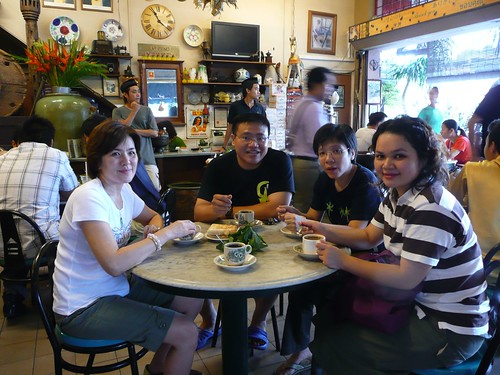
Please refer to earlier post JJCM in KT #4 for the first part. We selected a typically old fashion round coffee table with marble top sitting on old fashion round chair. The atmosphere felt authentic as we ordered our cup of Hainanese (a Chinese dialect that is famous for running coffee shops and old style bakeries) coffee. The only difference is that our order is taken by a Malay and we were served by a Malay.


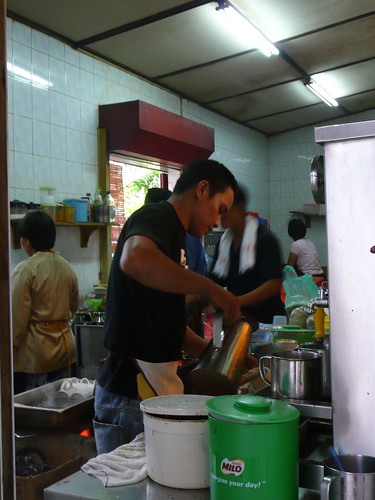
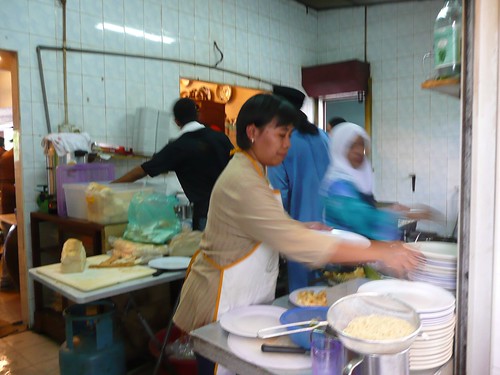
On the pretext of visiting the toilet, I peeked into the kitchen and was surprised that all the staffs preparing our food and drinks were also Malay. From the master coffee brewer to the bread toaster and the spaghetti chef. Yes, you can order spaghetti here.


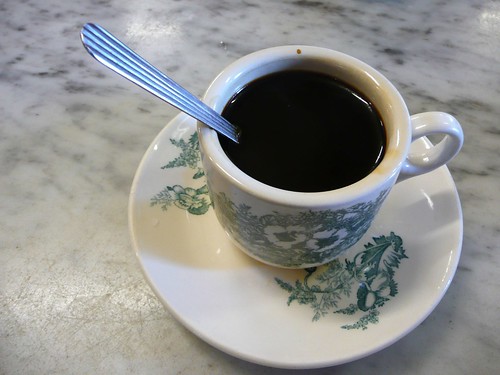
I ordered coffee the way I like it – thick, black and sweet. I remembered Charles Maurice immortal lines:

Black as the devil, Hot as hell,
Pure as an angel, Sweet as love.

It came in the standard coffee cup that one finds in every old style kopitiam in Malaysia. Now, Hainanese coffee may get some getting used to. Some may even say it is an acquired taste. I remembered once I took a very thirsty Australian master baker to a kopitiam and ordered a black ice coffee for him. He downed it with one huge gulp, wiped his mouth with the back of his hand and declared “that is the most awful coffee I’ve ever tasted in my entire life”. Everyone burst out laughing.


If you’re brought up on Nescafe, espresso and cappuccino, you may not like this coffee. We on the other hand think it is as ‘sweet’ as the devil and certainly not as pure as an angel. We have made our own unique modification and addition. The resultant taste is slightly ashy carrying a tinge of sourish fermented flavor and a solid robustness not for the faint hearted. As if this is not enough, the patrons will often asked for “kau kau” (thick thick) together with “ti ti” (sweet sweet). This is the Malaysian way.


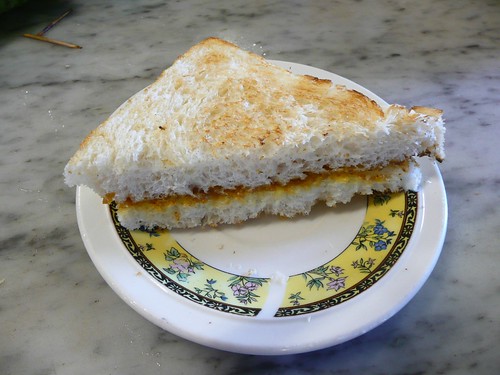
If there are some who do not like our coffee, I have not met any who do not like our toasted bread. No machine can do this job. It must be done by hand, over a fierce charcoal fire that is neither too hot nor too tame. The judgment of the one toasting is crucial so he can produce a well toasted bread (not burnt) that is crispy on the outside and soft and tender within which is a world of a different from dry machine toasted bread. On these slices are then slap a thick spread of kaya (coconut egg yolk jam) and margarine (preferably butter).


Hai Peng used the ‘correct’ bread for their toast. (Sandwich bread is a no-no for our local toast). They are called by several names such as Hainanese or Bengali breads because they are mostly made by such bakers using traditional ways. Today, they are mostly called “Pata Loaves”. But not all Pata loaves are equal; it depends on the way they are produced – by Straight Dough, Sponge & Dough or No-Time Dough methods and many variations of these. You did not know that bread is that complex and interesting? Well, not many people do. In a future post, I promise I’ll explain these in greater details.


But as a consumer, what is the difference you ask? Look at the texture, see how coarse they are. The texture is open but tender yet resilient while many of the bread which has much finer texture are silky but dry and no ‘body’. When you are eating bread, you want to eat bread, not cake-like bread. Good to look at but disagreeable to the tongue. The mouth-feel is completely different. Most of these Pata breads are made by long fermentation method so you get a good bread aroma instead of the bland stuff most coffee shops served these days. I better stop now before I get carried away. If any kopitiam owner wants an ‘expert’ opinion on the type of bread to use, who do you call? – The Ghost (not buster).


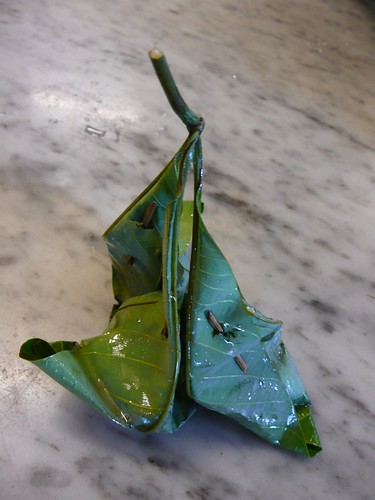
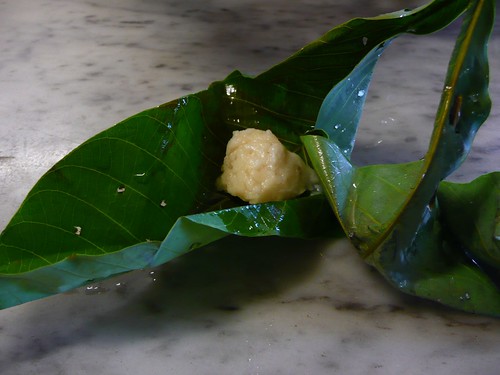
Phua brought over a string of “Pulut Tapai” that is wrapped in leaves. Being a Terengganunese, he enthusiastically recommended us to try it. We cautiously put a piece into our mouth and bit. Phoo! A very strong odor immediately overwhelmed us. The flavor is very similar to fermented rice wine. Way too strong for me. I drowned it with coffee. Phua was disappointed with our reactions, so were we but this is definitely an acquired taste.


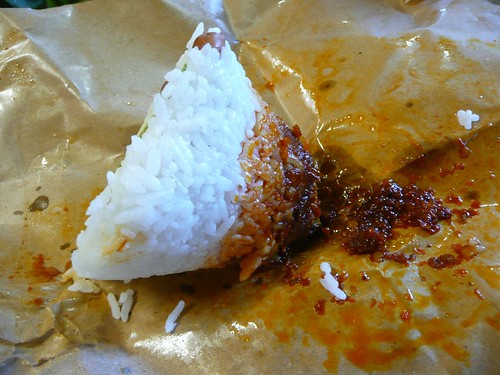
I was completely satiated by now putting down my third breakfast. But I was curious – what would the Terengganu nasi lemak (coconut fragrant rice with sambal – a pounded chilly, prawn paste, dried prawns, onion, tamarind, etc with palm sugar and salt) taste like?


My taste buds override my overworked stomach and I opened the paper wrapper (used to be coconut leaves in the old days) to reveal a delight. This is what a country beauty look and taste like. Unadorned, unassuming, unpretentious, relying on its natural goodness to win you over. With just the first spoonful, it evoked long time memory of a simpler life at a simpler time. I had forgotten the simple original taste of a good nasi lemak.


But I had by mistake took the package with the fish sambal (with no regret because it was great). I wanted to also try the anchovy sambal but this time my stomach put its “foot” down. I looked longingly at the basket and then decided I will hit this place again on the return trip. There were so many other foods to try but we have only one stomach (even though an extended one).


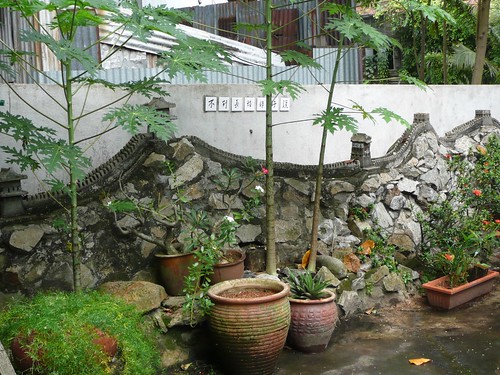
I liked Hai Peng for many reasons, not least of which is their sense of individuality, beauty and passion. At the back of the shop which not many outstation patrons may be aware of is a replica of the Great Wall of China. Seeing the Great Wall dwarfed by our papaya trees – now that is rich. And we left Hai Peng richer with our experiences which is why we will be back every time we passed by Kemaman.


To be continued...


Wednesday, November 14, 2007

JJCM in KT #4 – The Ambiance of Hai Peng Coffee Shop.


We decided to take the coastal road to Kuala Terengganu as we wanted the road with the lovelier view through rustic villages and an occasional view of the open sea. We hit “Chukai” (which means tax in Malay) by 11.30 am. What an odd name for a town I thought and mentioned that I would not want to stay in a place that constantly reminded me of taxes. Later, I found out that the first excise and customs department on the east coast was set up at Chukai because of its busy port. So there is a logic to the origin of its name.


“Shall we stop for coffee?” Phua asked.

I said “no” (Breakfast #2 not yet digested). June said “yes”. She won. But was I glad to have listened to a woman’s intuition. Man usually just listens to his stomach. For what a delight Hai Peng coffee shop turned out to be. It is the most famous establishment in this town popular with both locals and tourists alike.


The minute we stepped in, we knew this shop is special. Rarely had we came across a Malaysian coffee shop with such mixed clientele. Customers from different races were co-mingling and enjoying their morning cup of coffee. It is a sad fact of Malaysian life that after 50 years of Independence, there is hardly any social racial integration in spite of generally good racial harmony. That is why it is such a delight to see this fine example. The next thing I noticed are all those antique pieces tastefully displayed all over the shop and even hanging from the walls and ceilings giving it a unique atmosphere. The large black table you see in the center contained all kinds of goodies that you select to bring back to your own table for consumption. Help yourself, literally.


The shop has a very interesting combination of the old and new. Yet it somehow blended in well. Old bottles, ancient vase, are placed alongside stacks of boxes and modern displays advertising the shop’s delicacies.


There is a large picture of the original shop besides that of the founder owner toasting his coffee beans.


Established in 1940 and surviving the difficult years of the WWII, this shop has a lot of history. There must be a reason and a story behind each of the piece standing or hanging in the shop. What is the story behind the towkay’s hard hat? The old metallic clock? Or that bunch of ketupat skin (compressed rice packed in young coconut palm leaves) hanging from the celing?


There is a picture of a sweet little girl on the wall.


Who must have ridden on this tricycle a long time ago.


She has now grown up. We speculated which of these two ladies was the little girl and send Phua to find out. Four of us got it wrong. Who do you think is her? You can ask the answer yourself the next time you are in Chukai and visit the coffee shop that you absolutely should not miss.


Coming up next, we will give our marks for the coffee and food of Hai Peng Coffee Shop.


To be continued...