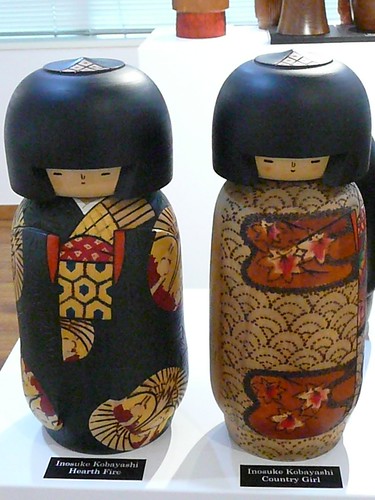
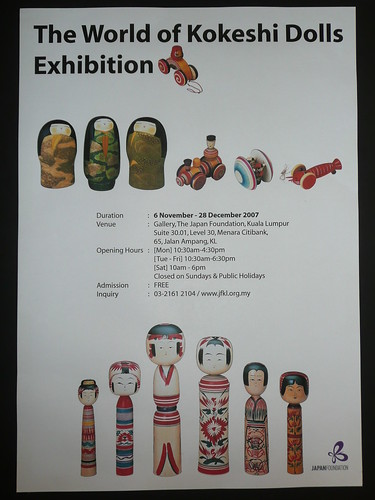
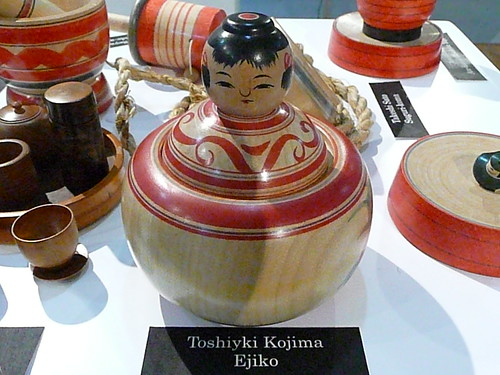
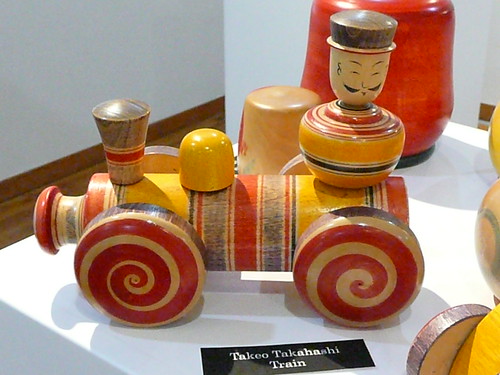
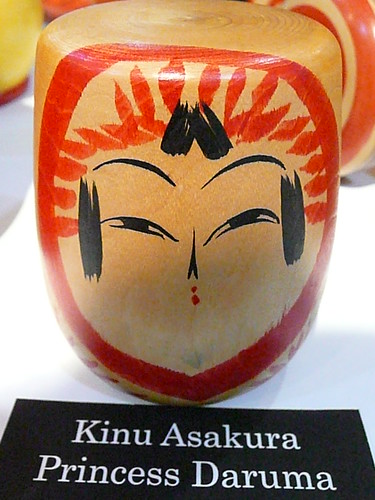
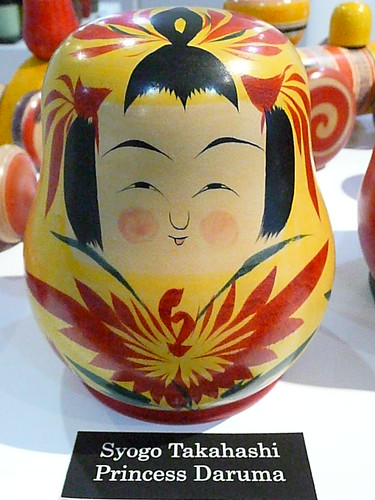
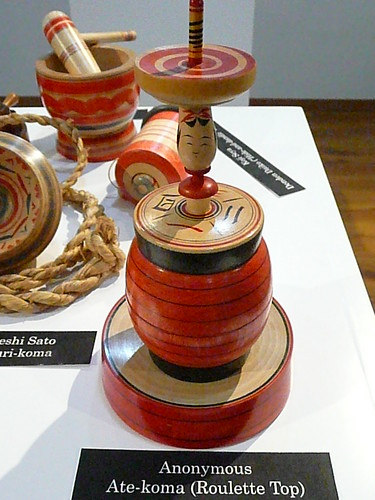
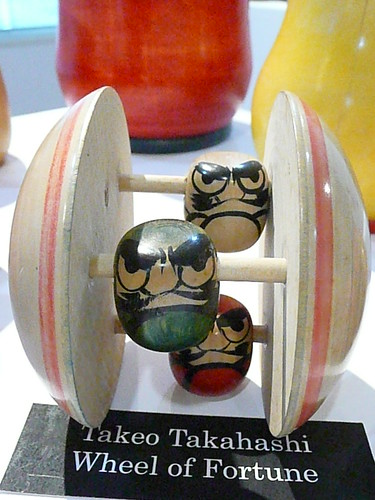
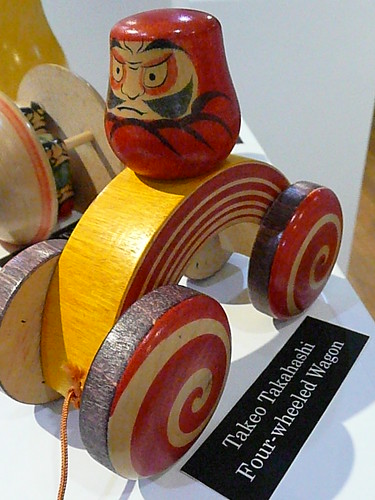
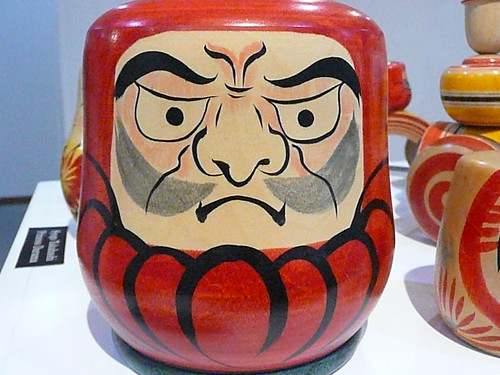
Recently I attended a Kokeshi Dolls Exhibition in The Japan Foundation in Kuala Lumpur. Kokeshi are Japanese wooden dolls. The Traditional Kokeshi are simple in design with a simple trunk and an enlarged head. The features are simply drawn with just a few thin lines yet this portrayed an amazing variety of expressions. The body are usually painted with simple flora designs with red, black and yellow being almost exclusively used. They are then covered with a thin layer of lacquer or wax. Kokeshi dolls have no arms or legs.

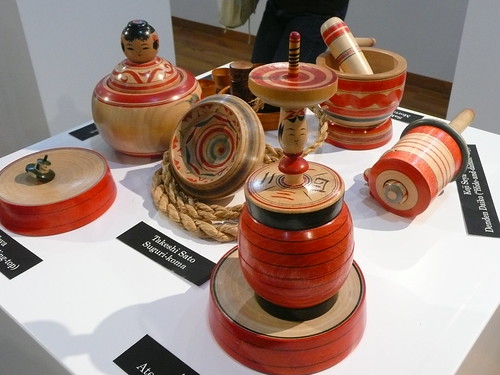
The hat of the doll in the center can be removed and spin as a top.

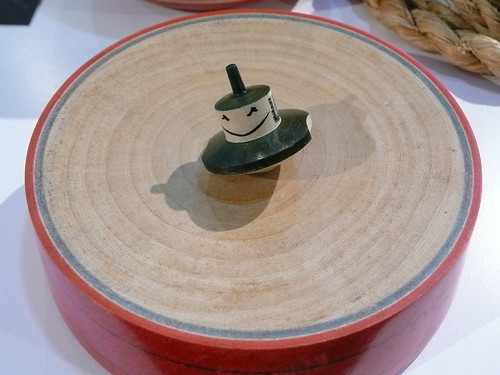
This is a sumo wrestler top.

This doll is unusual as the doll head is hidden in the body. It pops up if you pull the strings on the side.

Traditional Kokeshi started some 200 years back in the middle of the Edo Period (1603-1867). They were first produced in the Tohuku region for tourists who visited the region during winter. These were bought as souvenirs and given to children as it is believed it would promise a good harvest because it creates a good impression on the Gods to see children playing with dolls. Thus, it was especially popular with farmers. Today, they are also popular as a special gift for a new born baby and some even specially ordered a doll to correspond with the length of the baby.


Cherry wood is used for its darkness and dogwood for its softer lighter color. Japanese maple is also sometimes used. The wood for the dolls are left outside to season for one to five years. The seasoning will allow the wood to ‘ripened’ and bring out its colour.

Source: Dolls of Japan.
Daruma dolls are representation of the Indian priest Bodhidharma who traveled through Japan and China in the 5th or 6th Century AD. It represents the virtues of optimism, good fortune and determination. At New Year time, many individual and corporations buy a Daruma doll (without the eyes painted). A resolution is made and an eye is painted. If they are able to achieve the resolution, the other eye would then be painted. At year end, it is customary to take the doll to the temple where they are burned in a large bonfire. Many politicians also do the same before an election and painted the other eye when they won it.


The art of making Kokeshi dolls are usually passed down from one generation to another. The standard features have more or less remained the same over the centuries with minor variations such as some of these toy Kokeshi pictures. However, after the Second War World, another form of Kokeshi called Creative Kokeshi emerged to allow craftsmen more artistic freedom. This will be dealt with in the next post.